
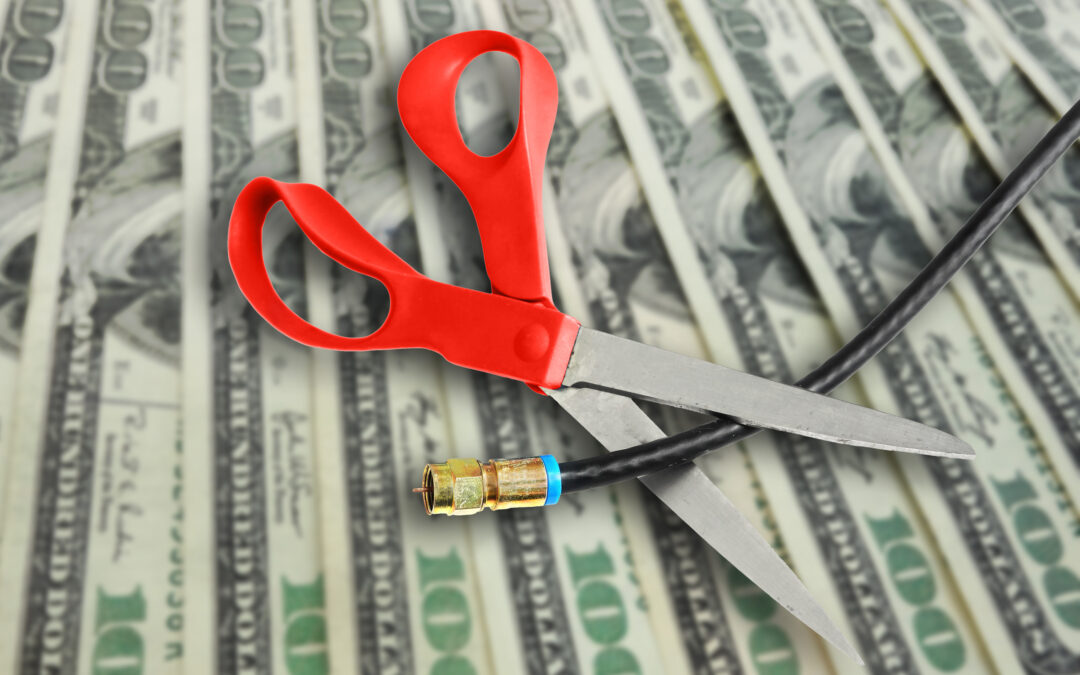
In the golden age of television, networks ruled the airwaves with massive audiences tuning in for everything from prime-time dramas to live sports and breaking news. But fast-forward to 2025, and the landscape has shifted dramatically. Streaming services like Netflix, Disney+, and YouTube have redefined content consumption, offering on-demand, personalized viewing at a fraction of the cost per eyeballs compared to traditional cable. Yet, legacy TV channels continue to hemorrhage billions in operating costs for viewership numbers that wouldn’t fill a mid-sized stadium. How do niche outlets like the Golf Channel survive with daily audiences barely scraping 100,000, while news behemoths like CNN and MSNBC prop up sprawling infrastructures for similarly dismal ratings? This article dives into the unsustainable economics of traditional TV, exposing the illusion of reach that’s keeping these dinosaurs afloat—for now. We’ll explore the data, dissect the models, and predict when the bubble might finally burst, forcing companies to stop throwing good money after bad views.
The Illusion of Reach: Niche Channels Clinging to Prestige
Let’s start with a prime example of TV’s baffling persistence: the Golf Channel. Launched in 1995 as a haven for golf enthusiasts, it has grown into a full-fledged network under NBCUniversal’s umbrella. On the surface, it seems like a success story—dedicated coverage of tournaments, instructional shows, and celebrity golfer spotlights. But peel back the layers, and the numbers tell a different tale. In 2025, the Golf Channel averages just 93,000 daily viewers. That’s not a typo; it’s a figure that pales in comparison to even moderately popular YouTube channels, which can rack up millions of views on a single video without the overhead of satellite uplinks, live production crews, and high-profile talent contracts.
So, how does it exist? The secret lies in the “perception of reach.” The Golf Channel isn’t sustained by its actual audience but by its inclusion in cable bundles. Millions of subscribers pay for it indirectly through their monthly bills, whether they watch or not. This generates carriage fees—payments from cable providers like Comcast or Spectrum to carry the channel—that form the bulk of its revenue. Estimates suggest these fees can amount to tens of millions annually, subsidizing budgets that include everything from studio operations to rights deals. For context, NBCUniversal’s broader PGA Tour rights agreement runs about $700 million per year, a chunk of which trickles down to the Golf Channel for its specialized content.
But here’s the disconnect: While major golf events on broadcast networks like NBC or CBS can draw 2-4 million viewers, the channel’s everyday programming—think reruns of instructional videos or niche tournaments—languishes in the low five figures. Advertisers are drawn in by the affluent demographic: Golf viewers are often high-income earners with disposable income for luxury brands. Yet, the cost per view is astronomical. Producing live golf coverage involves mobile units, multiple cameras, and on-site talent, easily pushing daily operating costs into the hundreds of thousands. Divide that by 93,000 viewers, and you’re looking at dollars per viewer, not cents like on streaming platforms.
This model isn’t unique to golf; it’s emblematic of sports media’s broader issues. Channels like the Tennis Channel or MLB Network operate similarly, banking on bundled revenue to offset low engagement. But as cord-cutting accelerates— with projections showing 77 million U.S. households ditching cable by the end of 2025—this facade is cracking. When subscribers flee to skinny bundles or pure streaming, niche channels lose their passive income stream. The Golf Channel’s parent company has already started pivoting, integrating more content into Peacock, NBC’s streaming service. But without a fundamental rethink, it’s living on borrowed time, propped up by the perception that “reach” equals value, even when the actual audience is a whisper in a crowded room.
Extending this logic beyond sports, we see similar patterns in other niches. Take religious broadcasting or home shopping networks—they too rely on bundle subsidies rather than raw viewership. The question isn’t just how they exist today, but how long they can last in a world where metrics like watch time and engagement drive dollars.
News Outlets: Overhead Empires Built on Shrinking Foundations
If niche sports channels are puzzling, news networks like CNN and MSNBC are downright enigmatic. These outlets were once titans, commanding millions during election nights or major crises. Today, they’re shadows of their former selves, yet their operating budgets remain colossal. CNN’s primetime viewership in mid-2025 averages around 497,000, a staggering 42% drop year-over-year. MSNBC fares slightly better at about 821,000, but that’s still down 24% from the previous period. Despite these declines, CNN pulls in roughly $1.8 billion in annual revenue, supporting an infrastructure that includes global bureaus, star anchors with salaries in the $10-20 million range, and 24/7 production cycles.
The overhead is mind-boggling. CNN’s expenses likely exceed $1 billion yearly, covering everything from satellite trucks to international correspondents. MSNBC, as part of NBCUniversal, shares in massive investments like a $200 million newsroom upgrade. Why persist? Again, it’s the bundle magic. Affiliate fees from cable providers—often $1-2 per subscriber monthly—provide a steady cash flow from 80-90 million households, regardless of who’s watching. Add in advertising from a loyal, albeit aging, demographic, and the model holds—for now.
But cracks are showing. CNN’s profits have dipped below $1 billion for the first time since 2016, prompting parent company Warner Bros. Discovery to implement cost-cutting measures, including layoffs and content pivots. MSNBC faces similar pressures, with viewership tied to political cycles that can’t sustain perpetual highs. The irony is palpable: These networks were designed for mass appeal in the cable era, but in 2025, news consumption has fragmented. People get breaking stories from social media, podcasts, or apps like X (formerly Twitter), where engagement is instantaneous and free.
Compare this to streaming news alternatives. Services like YouTube TV or free ad-supported platforms (FAST) deliver news clips with targeted ads, achieving higher efficiency. CNN has tried adapting with CNN Max, a digital streaming arm, investing $70 million in the pivot. But the core issue remains: Legacy overhead doesn’t scale down easily. Bureaus can’t be shuttered overnight, and talent contracts lock in costs. As audiences age out and younger viewers shun linear TV, these outlets risk becoming relics, surviving only as digital appendages to larger streaming ecosystems.
This isn’t limited to cable news; broadcast networks like ABC News or CBS face similar woes, though bolstered by over-the-air reach. The broader point: News, once a public service pillar, has become a financial albatross, living on the perception that constant availability equals necessity.
The Cable Bundle: A Fragile Economic Foundation
At the heart of this sustainability puzzle is the cable bundle model—a relic of the 1980s that’s now on life support. In essence, providers like Comcast or Charter bundle hundreds of channels, charging subscribers a flat fee. Channels like the Golf Channel, CNN, or MSNBC ride on the coattails of must-haves like ESPN or HBO, earning carriage fees per household. This can be $5-10 monthly per channel for popular ones, generating revenue untethered from actual viewership.
To illustrate the contrast with streaming, consider this breakdown:
| Aspect | Cable Bundle Model | Streaming Economics |
|---|---|---|
| Revenue Source | Affiliate fees per subscriber + ads | Direct subscriptions + ads/sponsorships |
| Cost per View | High (fixed overhead for low engagement) | Lower (scalable, data-driven content) |
| Sustainability | Declining due to cord-cutting | Growing, but with bundling trends |
| Example Impact | Golf Channel: Fees from bundles > views | Netflix: 270M subs drive targeted spend |
Streaming ties success to engagement. Netflix, with over 270 million subscribers, charges $7-15 monthly directly, using algorithms to optimize content spend based on watch time. If a show flops, it’s canceled; no bundle bailout. Traditional TV, meanwhile, spreads costs across unwilling payers, inflating perceived value.
But this crutch is crumbling. Cord-cutting is rampant: Comcast reported 226,000 internet and 325,000 TV subscriber losses in Q2 2025 alone. Overall, 46% of U.S. internet households are now cord-cutters. As bundles shrink, low-viewership channels face renegotiated fees or outright exclusion. Providers are pushing “skinny bundles” or a la carte options, where only popular channels survive.
The economic fallout is already evident. Networks are consolidating—think mergers like Warner Bros. Discovery—or spinning off assets. The bundle’s death will force a reckoning: Channels must prove value through actual views, not forced inclusion.
The Inevitable Shift: Streaming’s Triumph and TV’s Reckoning
The writing is on the wall: Streaming has eclipsed traditional TV. By 2025, streaming viewership has surged 71% since 2021, surpassing broadcast and cable combined. Platforms like YouTube and FAST services (e.g., Pluto TV) are booming, with FAST channels growing 14% in Q3 2025. These models prioritize efficiency: Low production costs, targeted ads, and global scale.
For legacy channels, adaptation is key. The Golf Channel is integrating with Peacock, potentially becoming streaming-exclusive. CNN and MSNBC are ramping up digital efforts, but challenges persist—streaming news struggles with profitability amid ad fatigue. Parent companies are slashing budgets: NBC has restructured sports assets, while Warner Bros. focuses on Max.
When will the spending stop? Likely within 2-5 years. As carriage fees evaporate, expect more layoffs, consolidations, and pivots. The bubble bursts when ad dollars fully migrate to digital, where billions buy billions of views, not breadcrumbs.
In conclusion, traditional TV’s persistence is a testament to inertia, not innovation. Channels like the Golf Channel and news outlets like CNN/MSNBC survive on outdated models, but streaming’s reality is closing in. Companies must wake up or fade out— the era of billions for thousands is ending.
Sources
The data and insights in this article are drawn from various reports and analyses. For transparency, here’s a compiled list connecting key content points to their origins:
- Daily viewership for Golf Channel (93,000 in 2025): Citation ID 0
- PGA Tour rights deal ($700 million annually): Citation ID 42
- Major golf event viewership (2-4 million): Citation IDs 1, 4
- Cord-cutting projections (77 million U.S. by 2025): Citation ID 92
- CNN primetime viewership (497,000, down 42%): Citation ID 21
- MSNBC viewership (821,000): Citation ID 10
- MSNBC viewership decline (24% in May 2025): Citation ID 18
- CNN annual revenue ($1.8 billion): Citation ID 30
- MSNBC newsroom investment ($200 million): Citation ID 48
- CNN profits dip (below $1B since 2016): Citation ID 32
- CNN digital investment ($70 million): Citation IDs 36, 84
- Carriage fees examples ($5-10 per subscriber): Citation IDs 58, 63
- Streaming economics (Netflix subscribers, pricing): Citation IDs 59, 60
- Comcast subscriber losses (Q2 2025): Citation ID 88
- U.S. cord-cutters (46% of households): Citation ID 94
- Streaming viewership growth (71% since 2021): Citation ID 72
- FAST channels growth (14% in Q3 2025): Citation ID 70
These citations reference web searches, reports, and industry data compiled for accuracy. For full details, refer to the original sources linked via the citation system.