
The Evolution of Media Consumption
The way people consume media has never changed faster than it is changing today. For decades, television programming followed a fairly predictable formula: 30-minute or 60-minute shows, fixed schedules, and advertising breaks that audiences accepted as part of the experience.
That model is now being replaced by a fragmented, algorithm-driven ecosystem where audiences choose when, how, and how long they watch content.
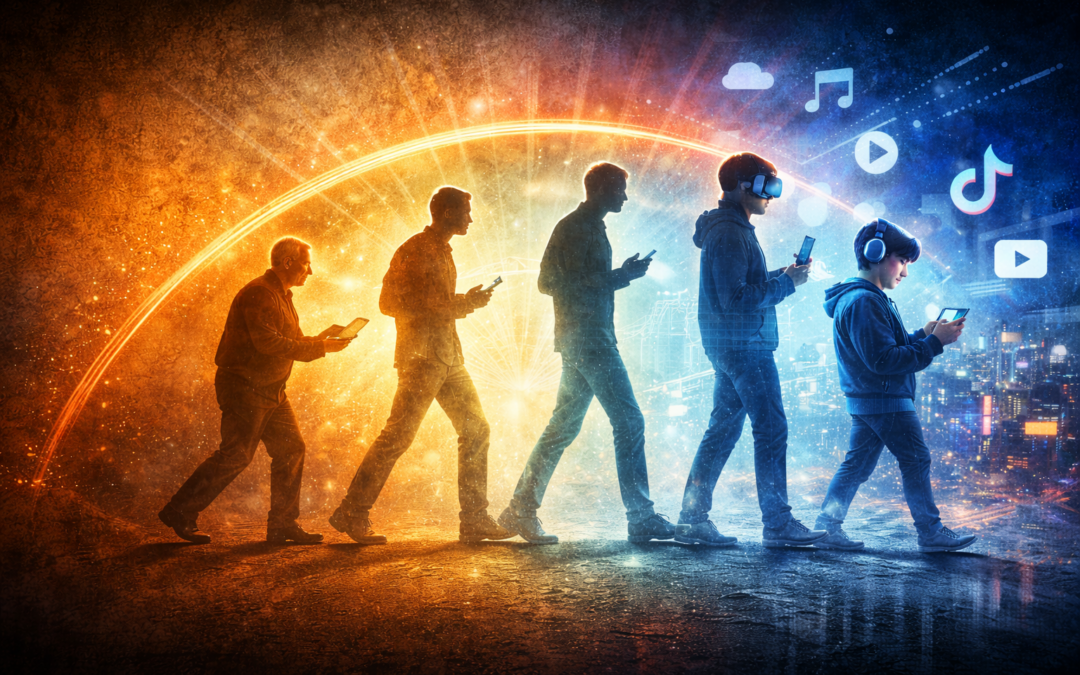
To understand where media is heading, it helps to look at how each generation consumes content. The differences are striking — and they reveal where the biggest opportunities lie for creators and platforms today.
Media Consumption by Generation
Baby Boomers (Born 1946–1964)
Baby Boomers grew up with traditional broadcast television and still prefer a viewing experience that resembles it.
Typical behavior
-
Prefer watching on television screens
-
Comfortable with 30–60 minute programming
-
Often watch scheduled or curated channels
-
Higher tolerance for advertising
Common platforms
-
YouTube
-
Facebook
-
Netflix
-
Amazon Prime Video
Boomers often watch longer sessions, treating streaming much like cable television. This generation still represents a large portion of viewers on FAST (Free Ad-Supported Television) platforms.
Generation X (Born 1965–1980)
Generation X sits at the intersection of traditional media and digital streaming.
They remember life before the internet but adapted quickly to streaming services and on-demand viewing.
Typical behavior
-
Uses Smart TVs and laptops heavily
-
Mix of long-form and shorter content
-
Prefers 20–40 minute episodes
Common platforms
-
YouTube
-
Netflix
-
Hulu
-
Amazon Prime Video
Gen X is often described as the bridge generation between traditional television and digital streaming.
Millennials (Born 1981–1996)
Millennials helped create the modern streaming economy.
They were early adopters of Netflix, YouTube, and social media video platforms.
Typical behavior
-
Heavy binge watching
-
Comfortable with short seasons
-
Prefer episodes 10–30 minutes long
Common platforms
-
YouTube
-
TikTok
-
Netflix
-
Disney+
Millennials value authentic, personality-driven content and often discover shows through recommendations and algorithms rather than network schedules.
Generation Z (Born 1997–2012)
Generation Z is the first generation to grow up fully immersed in smartphones and algorithm-driven media.
Their viewing habits differ dramatically from previous generations.
Typical behavior
-
Mobile-first viewing
-
Short attention spans for traditional programming
-
Prefers content 30 seconds to 10 minutes
Common platforms
-
TikTok
-
YouTube
-
Instagram
-
Snapchat
Content discovery is almost entirely algorithm driven, not scheduled.
The Sweet Spot for Modern Content
Despite the differences between generations, an interesting pattern has emerged.
The sweet spot for modern episodic content is roughly 8–15 minutes.
This format works because:
-
Boomers will still watch it
-
Gen X appreciates the efficiency
-
Millennials binge multiple episodes
-
Gen Z tolerates it within their shorter attention window
Shorter episodic formats also allow platforms to build large content libraries quickly, which is critical in the streaming economy.
The Three Most Valuable Content Categories Today
Across the FAST streaming ecosystem, three categories consistently outperform others.
1. Sports (Especially Niche Sports)
Sports content remains one of the strongest drivers of engagement.
Unlike scripted programming, sports content offers:
-
Built-in audiences
-
Repeat viewing
-
Event-driven excitement
Interestingly, niche sports often perform exceptionally well because passionate communities exist around them.
Examples include:
-
combat sports
-
pickleball
-
motorsports
-
fishing and outdoor sports
-
specialty golf content
These audiences are often underserved by major networks.
2. Unscripted and Reality Content
Unscripted content is highly attractive because it is:
-
cheaper to produce
-
personality driven
-
easy to binge
-
highly shareable
Competition formats, athlete stories, behind-the-scenes narratives, and lifestyle shows fall into this category.
Many FAST platforms rely heavily on unscripted programming because it can scale quickly.
3. Documentary, Travel, and Lifestyle
This category performs extremely well because viewers often leave it playing for long periods, similar to traditional cable networks.
Examples include:
-
travel shows
-
outdoor adventure
-
food culture
-
regional exploration
-
destination programming
This type of content is especially valuable for background viewing, which drives long viewing sessions.
The Real Challenge: The Speed of Change
Perhaps the most important shift in modern media is how quickly viewing behavior evolves.
For Baby Boomers, media habits remained relatively stable for decades.
But with each younger generation, the window of opportunity shortens.
| Generation | Approximate Media Cycle |
|---|---|
| Boomers | 20–30 years |
| Gen X | 10–15 years |
| Millennials | 5–8 years |
| Gen Z | 2–4 years |
New platforms emerge quickly, algorithms change constantly, and audiences migrate rapidly.
A format that works today may require adjustment within just a few years.
The New Rule for Content Creators
Success in modern media is no longer about predicting the future perfectly.
Instead, it is about building adaptable content models.
Creators who succeed today typically:
-
produce shorter episodic content
-
focus on passionate niche audiences
-
build scalable libraries
-
adapt quickly as viewing habits evolve
In other words, the winners in the modern media landscape are not the biggest studios.
They are often the most agile creators and platforms.
The Opportunity Ahead
The rise of streaming and FAST platforms has created an unusual moment in media history.
Production tools are cheaper than ever.
Distribution is global.
And niche audiences are easier to reach.
For creators willing to understand generational viewing patterns and adapt quickly, the opportunity to build meaningful media platforms has never been greater.
The key is recognizing one simple reality:
The future of media will belong to those who can evolve as fast as the audience does.