

Before smartphones, before TikTok, before streaming services like Hulu and Netflix, and before YouTube turned every living room into a broadcast studio — there was Real TV.
When we launched in September 1996, we weren’t just riding the camcorder craze—we were pioneering a new kind of media.
As the host for the first four seasons, I witnessed firsthand how a syndicated show built on audience-sourced video could become a cultural phenomenon.
There’s a lot to cover here. So we will break it down into two blogs.
The first one, here, we’ll cover how Real TV is responsible for today’s high-tech video platforms. But we’ll also show you how the foundations of Real TV safeguarded viewers and video producers and how that has been abandoned today and needs to be revived.
The second one will explain why the show itself couldn’t continue, but its foundation way back in the camcorder era of the 1990s is the foundation for today’s smart phone video world – including our show Undercover Jetsetter.
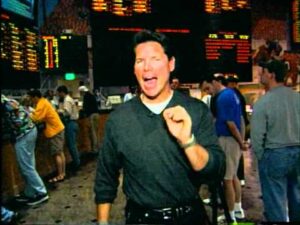 A Show That Broke the Mold
When we launched in September 1996, we weren’t just riding the camcorder craze, we were pioneering a new kind of media.
Real TV was the first nationally syndicated television series built entirely around real-life moments captured on tape and the powerful, sometimes jaw-dropping stories behind them.
This was before social media, before cloud storage, before anyone could instantly record life as it happened.
Back then, recording a video meant digging out a bulky camcorder, and submitting it to a national TV show, labeling a VHS tape, mailing it, and waiting to see if it aired.
But somehow, it worked.
In fact, it exploded.
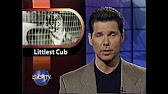 Real TV Thrills and Safe Watching
Primal Thrills: What the Real TV team tapped into was the thrill of seeing real people doing real things, captured in the moment. The show’s fast cuts, dramatic narration, and humorous yet respectful tone created something addictive.
It was infotainment before we had a name for it.
Safe, Credible TV Watching: Real TV didn’t just curate wild clips—we verified them. We fact-checked before fact-checking became a 21st Century wide reality. That credibility was our secret weapon.
Here’s a great example you would never know about without reading this blog. We had a video submitted to us that was allegedly from another angle of the Kennedy assassination in 1963 in Dallas.
We never aired it. Why? Because we could not verify it.
Despite turning down potentially addictive ratings magnets, we still quickly became the highest-rated first-year syndicated show.
Videographer Thrills: Viewers didn’t just consume Real TV they contributed to it. They hauled out their camcorders, filmed incredible moments, and mailed their tapes to us.
The reality hit the staff two months after launch. Our FedEx guy went from carrying a few envelopes — to backing up a van filled with submissions almost every day.
Why? We signed contracts. We paid for footage. We treated contributors like professionals. In doing so, Real TV democratized content creation, years before platforms like YouTube or TikTok made it the norm.
In our next blog, we will explain how this democratized content also led to the show’s downfall.
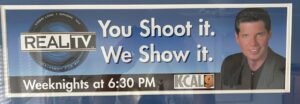 Real TV Popular as Irish Whiskey
At that time, though, the show’s popularity was a shock to me – as a first-time national TV host.
I witnessed some eye-popping and funny moments.
My wife Teri and I flew from Las Vegas to New Orleans for the NATPE television convention which sold the show to syndicators and TV station groups. We had a stopover in St. Louis and we ate at one of the airport’s open air restaurants.
Being a former news anchor from different local markets, I never figured anybody outside those local markets would know who I was.
And then Teri whispered to me:
“Oh my God. Everybody in this place knows who you are.”
The show had only aired for four months. That ended my obliviousness.
 Years later, in Dublin, Ireland, while attending a celebrity golf event for the US-Ireland Alliance, a cab driver looked at me and said in a thick Irish brogue:
“You’re the Real TV guy.”
He told me the show aired in Irish pubs four times a week.
When I asked why not five times, he said:
“Because of pub night.”
That was just Ireland!
Understand that the show was syndicated nationally but also in English speaking countries like Canada and the UK.
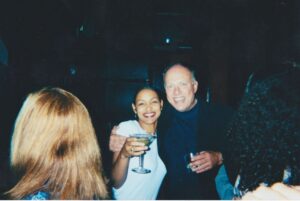 Real TV was the first all-video news magazine show, syndicated nationally by Paramount Domestic Television. I was blessed to work with this groundbreaking team — who were also a ton of fun to be with after work.
Our executive producers—Ron Vandor, Cheri Brownlee, and Jennifer Mullen—were brilliant architects of a format that hadn’t existed before.
Senior producers John Johnston and Michael Horowicz brought journalistic rigor to the chaos of camcorder footage.
Along with established Producers Ken Davis, Jason Bourgault, Heidi Dahman, the late Danny Tobias, Joe Guidry, George Ciccarone, Rick and Carol Lombardo, Scott Silvey, Vicki Johnson, Paul Fishman, Jerry Peluso, Matt Gaven, and many more, who have also had stellar Hollywood producing careers.
We also had some young and talented on-camera reporters in Sibila Vargas and Michael Brownlee who both launched outstanding news careers.
And many more in this 100-person team.
Success Led To The End
But the reasons that Real TV was so successful at the end of the 20th Century were also the reasons for its downfall as a regular, every night TV show.
We’ll dive into that — but also why the “TV genes” of Real TV still live today.
And they need to be a bigger part of our “video all over the place” world.
Stay tuned here for that.
This post contains affiliate links, which means we may earn a small commission if you purchase through them — at no extra cost to you. It helps us keep bringing you Jetsetter-approved tips, recipes, and sips. Thank you!
John Daly and Susan Anzalone are the Co-Creators and Co-Hosts of Undercover Jetsetter, a show on travel, food, and booze. They show you how to jet set the world and at home. They also co-authored the book, The TV Studio In Your Hand: How to Shoot, Edit & Deliver the Easy Way on Your iPhone. Join them for tips and hacks on the road, at home, or in the kitchen, and all over the world. And yes, as you will see, all on the iPhone. Susan is an expert in food and wine since her childhood days in Australia and then the United States, being the daughter of two lifelong employees of Pan Am Airlines. John is also a world traveler starting when he studied in Italy through his alma mater Providence College. John is also a Nevada Hall of Fame Broadcaster during his years as a Las Vegas news anchor at KTNV. He gained international fame as the host of the first all-video news magazine show, Real TV while also securing his bartending and mixology credentials from the Harvard Bartending School. You can follow them here on UndercoverJetsetter.com, , on YouTube, Facebook, X, Instagram, and on the free Wingding app on the Food and Travel Channels.