

We explained, in our last blog, the reasons for the success of Real TV in the late 1990s:
- Camcorder technology giving us caught on tape moments
- Verified video content
- Allowing the audience and companies to be part of the Real TV team — and get paid for it.
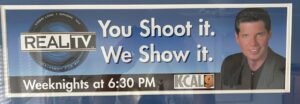 That is the billboard in LA way back when. But it captured the hook for the audience.
You Shoot It. We Show it.
Ironically, that audience embrace was the main factor to the show’s end as a regularly syndicated TV show in America and around the world.
Here’s why.
Most of our contracts with the video producers – who were also Real TV watchers were limited time contracts — typically two years.
After that, ownership of the video content reverted back to the creators.
- Yes, many individual audience members who sent in videos were thrilled to get their video on national and worldwide TV. However, many of them were also entrepreneurs who saw their limited rewards if they gave total control of their videos to a syndicated TV show. And they also saw a bigger market coming: copycat video shows on regular TV, cable, and online. They could sense the beginning of the end for the network television monopoly – that started way back in the 1930s.
- And there were many corporate video companies – like Getty, ABC News, CNN, Reuters, BBC, and other Video Monitoring Services – that were not going to relinquish all their rights to Real TV while still getting paid and getting good exposure.
 That led to an audience decline that couldn’t be stopped – in both first-run and also re-run syndication.
- First, we competed for viewers against talk shows and game shows that didn’t have content restraints.
- Second, there was a swarm of copycat caught-on-tape video shows flooding your TVs on regular broadcast TV, the expanding cable TV industry, and today’s current king — the Internet.
- Sure, our earlier produced shows still aired from 2000 to 2003 on various cable channels such as Spike TV and Fox Reality Channel. But, as time moved on, and we didn’t own a lot of the content — so, re-run syndication also dried up.
So, the very thing that made us revolutionary — audience-sourced video — also made us short-lived.
Real TV stopped production of new shows in 2001.
I could sense the show was not able to compete with the changing audience and technology.
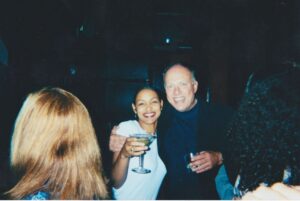 It was very sad for me after enjoying four years of hosting almost 800 shows.
Worse, I would miss working with the incredible staff – that made it happen while making TV history.
Think about this. We embraced our audience – making them paid video producers of the show. Yes, it might have been a short-sighted business plan that ended the show sooner than we thought.
That’s just part of the revelations ahead — that is evident today as Real TV had made its mark.
The Road to YouTube, Vimeo, and Beyond
Real TV was a precursor to the platforms that now dominate our media landscape.
We laid the groundwork for:
- YouTube
- Vimeo
- TikTok
- Instagram Reels
If you search “Real TV” on YouTube, you’ll find clips that still hold up.
And if you search for “Real TV” on Facebook, you will see hundreds of Real TV sites from creators that have nothing to do with the original show. In fact, Real TV, the show, has nothing on Facebook.
Still, the DNA of our show is everywhere — from viral fails to dashcam drama to citizen journalism.
Real TV’s Legacy in Today’s Media
Let’s break down how Real TV anticipated today’s media trends:
First, here are the good elements maintained by today’s video platforms.
- Audience-sourced content: We invited viewers to send in their own footage. Today’s platforms depend on user-generated content.
- Democratized storytelling: We treated everyday people like professional storytellers. Now, anyone with a phone can become a creator, influencer, or journalist.
Here are the benefits Real TV introduced – MISSING today.
- Limited rights contracts: Real TV contributors retained ownership. Today, most platforms require perpetual or exclusive rights, often without compensation, unless they hit hundreds of thousands of viewers or clicks. That needs to change.
- Monetization for creators: We paid contributors. Today’s platforms offer ad revenue, sponsorships, and affiliate marketing — but often with less transparency and ever-changing payment deals that benefit the corporate platform owner more. Granted, these platforms provide technology and most times a site open to the public.
- Verification of authenticity: Every video we aired on Real TV was vetted for authenticity. Today’s misinformation and deepfakes are rampant, needing the fact-checking we had back then.
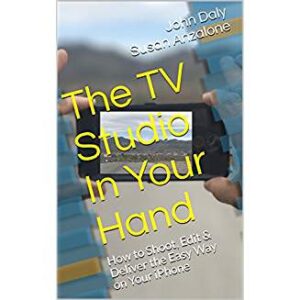 The TV Studio in Your Hand
Years later, Susan and I wrote The TV Studio In Your Hand — a guide to shooting, editing, and delivering professional video using just your iPhone. It’s the spiritual sequel to Real TV.
Personally, I know if I had remained a news anchor or reporter, I would have never been able to use the skills Real TV gave me to be an independent video producer.
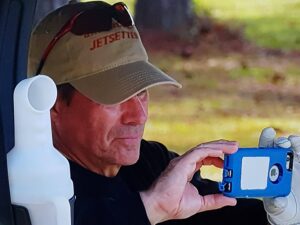
We took the ethos of audience-powered content and made it mobile, accessible, and monetizable — so you could create your own Real TV. You can find the book here. That philosophy powers our current show, Undercover Jetsetter, which blends travel, food and cocktails with smartphone production. You can catch it here.
 Final Thought Sign-Off
Real TV wasn’t just a show—it was a movement.
It proved that ordinary people with camcorders could create extraordinary content.
It showed us that media isn’t just something we watch; it’s something we make.
We didn’t know it then, but we were building the foundation for a world where everyone really does have a TV studio in their hand.
I hope this will be a look-back into what has helped lead to today’s video world we all live in.
And I want this blog as a tribute to the team I worked with who made a huge impact on my career. I thank them every day.
Give us your thoughts here if you were a Real TV viewer or a video contributor. We would love to hear your interpretation of Real TV’s legacy and what you experienced.
This post contains affiliate links, which means we may earn a small commission if you purchase through them — at no extra cost to you. It helps us keep bringing you Jetsetter-approved tips, recipes, and sips. Thank you!
John Daly and Susan Anzalone are the Co-Creators and Co-Hosts of Undercover Jetsetter, a show on travel, food, and booze. They show you how to jet set the world and at home. They also co-authored the book, The TV Studio In Your Hand: How to Shoot, Edit & Deliver the Easy Way on Your iPhone. Join them for tips and hacks on the road, at home, or in the kitchen, and all over the world. And yes, as you will see, all on the iPhone. Susan is an expert in food and wine since her childhood days in Australia and then the United States, being the daughter of two lifelong employees of Pan Am Airlines. John is also a world traveler starting when he studied in Italy through his alma mater Providence College. John is also a Nevada Hall of Fame Broadcaster during his years as a Las Vegas news anchor at KTNV. He gained international fame as the host of the first all-video news magazine show, Real TV while also securing his bartending and mixology credentials from the Harvard Bartending School. You can follow them here on UndercoverJetsetter.com, , on YouTube, Facebook, X, Instagram, and on the free Wingding app on the Food and Travel Channels.