
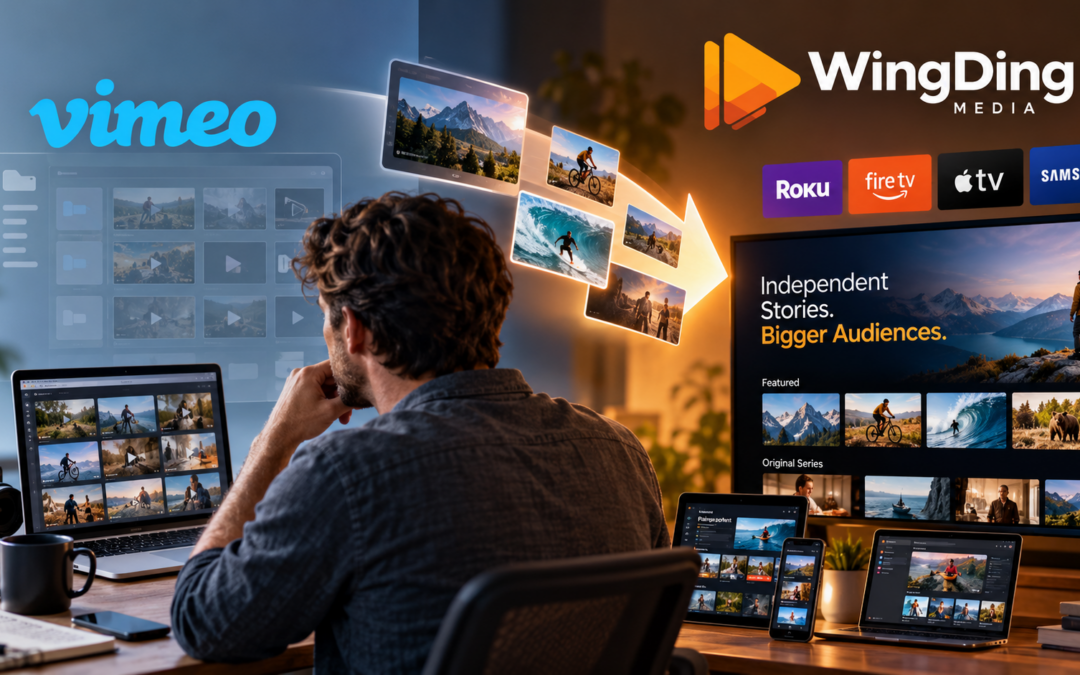
Vimeo’s changing subscription landscape has creators reconsidering their options. But before choosing another video hosting service, there’s a bigger question worth asking: What could your content accomplish beyond being hosted?
A Changing Landscape for Vimeo Creators
For nearly two decades, Vimeo has been an important part of the online video industry. Filmmakers, production companies, independent creators, and businesses have relied on the platform to host, organize, present, and share their work.
It earned that position by offering something different from the crowded, advertising-driven environment of platforms like YouTube. Vimeo provided a professional home for video content, with customizable players, privacy controls, embedding capabilities, and tools designed around the needs of creators.
But the landscape is changing.
In September 2025, Vimeo announced its acquisition by Italian technology company Bending Spoons in a transaction valued at approximately $1.38 billion. The acquisition was completed in November 2025.
Since then, Vimeo has been introducing changes to its subscription offerings, including new plans and pricing structures. Some longtime customers have expressed frustration about what those changes could mean for their budgets, particularly as existing subscriptions come up for renewal.
Vimeo, for its part, has described its plans as part of a broader effort to improve the platform, expand capabilities, and strengthen its long-term business.
Regardless of where the changes ultimately lead, they’re prompting some creators to ask a familiar question:
Is there a better Vimeo alternative?
For some, the answer may be another video hosting provider offering comparable features at a more attractive price.
For others, however, this may be the perfect time to consider something entirely different.
The Question Isn’t Just Where to Host Your Videos
Think about the work that goes into creating quality video content.
There’s the planning, scripting, filming, editing, graphics, audio production, and countless hours required to turn an idea into a finished product.
Whether you’re producing documentaries, episodic programming, sports coverage, educational content, or an independent television series, you’ve invested considerable time, talent, and often money into creating something valuable.
And when the production is finished, what happens?
You upload it.
Maybe you embed it on your website. Share it on social media. Send a link to your email subscribers. Perhaps you publish it on YouTube as well.
Then you move on to the next production.
There’s nothing inherently wrong with that approach. But it raises an interesting question.
Are you getting everything you can from the content you’ve already created?
Video hosting and video distribution are related, but they’re not the same thing.
Hosting makes your content available.
Distribution is about putting that content in places where audiences can discover and consume it.
And for creators interested in building a sustainable media business, that distinction matters.
Video Hosting vs. Video Distribution: Understanding the Difference
A video hosting service provides the infrastructure needed to store, manage, play, and share video files. Depending on the platform, it may also provide analytics, privacy settings, branding, collaboration, and other professional tools.
Vimeo has long been a respected provider of these services, and its offerings extend beyond basic hosting into live events, marketing tools, and OTT solutions.
But many creators aren’t taking advantage of the full range of opportunities available beyond their existing publishing channels.
Consider the difference between uploading an episode to a website and having that same episode available through a broader network of streaming destinations.
A viewer may never visit your website. They may never encounter your social media posts. They may not even know your production exists.
But they might discover your content while browsing a streaming app on their television, exploring programming on a connected device, or looking for content related to a subject they enjoy.
That’s where a distribution strategy can begin to change the equation.
Instead of asking where to store a video, the conversation becomes:
- Where are the audiences who might enjoy this content?
- How can we make our programming accessible on the devices and platforms they use?
- Can we build a recognizable brand around our content?
- What opportunities exist for sponsorship, advertising, or other forms of monetization?
- How can we extend the useful life of our existing content library?
These are questions that go beyond the typical video hosting decision.
Your Video Library May Be More Valuable Than You Think
One of the most overlooked assets in independent media is the existing content library.
Consider a production company that has created 50 documentary episodes over several years. Or a sports organization sitting on hundreds of hours of competition footage. Perhaps an independent producer has developed a travel, cooking, automotive, outdoor, or lifestyle series.
The content exists. The production expenses have already been incurred.
But much of that programming may be generating little ongoing exposure or revenue.
In some cases, the only thing missing is a more effective strategy for getting it in front of viewers.
Of course, not every video is suited for broad distribution. Internal corporate presentations, private client projects, and unfinished productions have different requirements.
But creators with finished, audience-ready programming may have an opportunity to do considerably more with what they’ve already produced.
A well-organized content library can become the foundation for a branded streaming presence, a specialized programming channel, or an expanded digital media business.
And the value of that library doesn’t necessarily end when the next episode is published.
Evergreen programming can continue attracting audiences long after its original release, provided it remains relevant, accessible, and properly promoted.
Meet WingDing Media: A Different Approach to Video
At WingDing Media, we approach video from the perspective of distribution and audience development.
We’re not trying to become another inexpensive place to store video files.
There are already plenty of services for that.
Our focus is helping creators, producers, organizations, and media brands take their content beyond traditional hosting and explore opportunities for broader distribution.
Through our streaming media infrastructure, WingDing supports content distribution across connected television and digital environments, including platforms and devices such as Roku, Amazon Fire TV, Apple TV, and other supported destinations.
We also offer opportunities for branded streaming experiences, content organization, advertising strategies, and digital marketing support.
For a creator with an established content library, that opens the door to a very different conversation.
Instead of paying simply to keep a collection of videos online, what if those videos became part of a larger media strategy?
What if your existing series could reach viewers beyond your website and social media following?
What if you could build a recognizable programming brand around the content you’ve already created?
What if your next production was developed with a distribution strategy in place before the cameras ever started rolling?
Those are the kinds of opportunities we explore with creators.
And while distribution doesn’t automatically guarantee viewers or revenue, it provides a foundation for building something more substantial than a collection of hosted videos.
Not Every Vimeo Customer Needs WingDing. And That’s Okay.
Let’s be clear about something.
If you’re looking for a Vimeo alternative because you need inexpensive video storage, password-protected client reviews, or a convenient way to embed a handful of videos on your website, WingDing probably isn’t what you’re looking for.
That’s not our business model.
But if you’ve built a library of finished content and want to explore how to reach more viewers, develop a media brand, or create additional monetization opportunities, we should probably talk.
The distinction is important.
We’re particularly interested in working with independent producers, documentary filmmakers, sports organizations, television content creators, niche programming networks, and businesses producing ongoing video series.
These creators often have something valuable in common: content that could appeal to audiences beyond the channels where it’s currently being published.
What they may lack is access to a broader distribution strategy and the resources needed to execute it.
That’s where WingDing can help.
The Next Chapter for Independent Content Creators
The way audiences consume video has changed dramatically.
Television is no longer defined exclusively by cable packages and traditional broadcast schedules. Connected televisions, streaming devices, mobile applications, and on-demand platforms have created new ways for viewers to find programming.
For independent creators, this evolution presents both opportunities and challenges.
Producing quality content remains essential. But quality alone doesn’t guarantee discovery.
A great documentary nobody encounters is still a great documentary. It simply hasn’t reached its potential audience.
A compelling sports series that lives exclusively on a producer’s website may have fans who would gladly watch it on their living room televisions, if they knew where to find it.
And an established content library may represent an opportunity to develop programming partnerships, sponsorship packages, and advertising relationships that weren’t part of the original production plan.
None of these opportunities happen automatically. Successful distribution still requires planning, promotion, audience development, and a realistic business model.
But the tools and infrastructure available to independent creators have evolved considerably.
The question is whether their distribution strategies have evolved along with them.
Before You Renew Your Vimeo Subscription, Ask Yourself This
If you’re happy with Vimeo and it meets your needs, there’s no reason to change simply because the company has a new owner.
And if your primary concern is hosting cost, comparing other hosting services makes perfect sense.
But if you’re already reconsidering your video platform, why limit the evaluation to storage capacity, player features, and subscription fees?
Take a look at your content library.
Think about the audience you currently reach and the audience you’d like to reach.
Consider whether your content could support a broader streaming presence, a recognizable media brand, or additional revenue opportunities.
You may discover that the most important question isn’t which platform offers the least expensive place to keep your videos.
It’s which strategy gives your videos the greatest opportunity to accomplish something.
Your Content Deserves More Than a Place to Live
WingDing Media works with creators and organizations interested in expanding the reach and potential of their video programming.
We don’t promise that every video will find an audience or that every content library will become a profitable streaming business.
But we do believe creators should understand the opportunities available to them before settling for another year of simply hosting their work.
If you’re exploring a Vimeo alternative and your ambitions extend beyond video storage, we’d welcome the conversation.
You created the content. Let’s explore what it can become.
Explore Your Video Distribution Opportunities with WingDing Media.